
The hits keep on coming for Ohio Charter Schools.
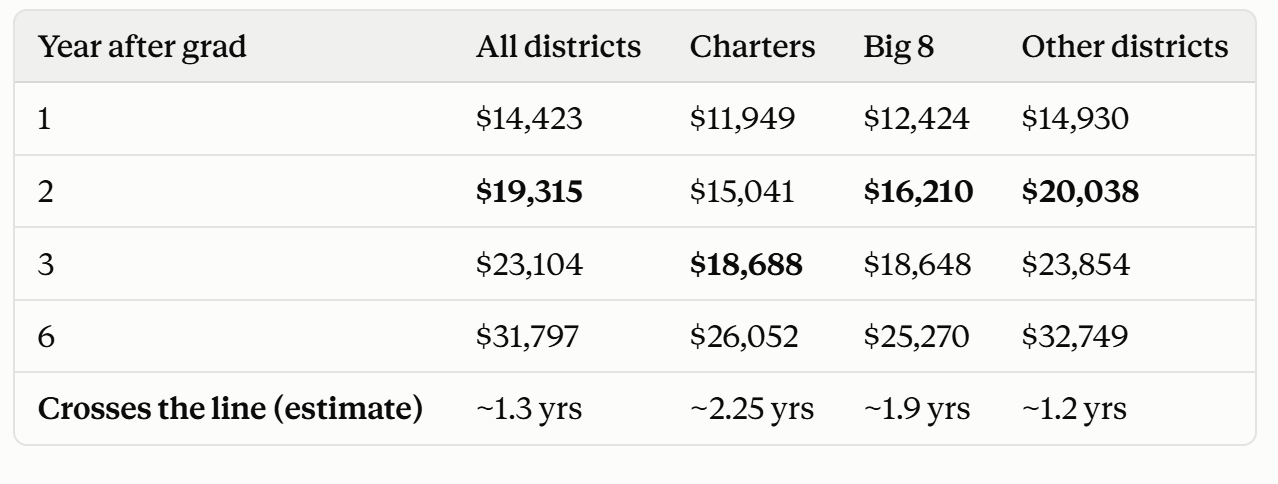
Now we come to find out that typical graduates from 19% of Ohio’s Charter High Schools don’t make more than the federal poverty line ($15,960) during the entire time state data measures their income, sometimes as long as 6 years.
Typical graduates from all but 1 of Ohio’s 613 traditional public school districts (Fairland Local in Lawrence County) do that within the timeline. Even Youngstown, which has been under state control for a decade now because their academic performance was so “poor” gets out in 5 years — one year short of the maximum.
In fact, typical graduates from 87% of Ohio’s traditional public schools are out of poverty by their second year after graduation.
Meanwhile, only 30% of Ohio Charter Schools have their typical graduates out of poverty by year 2 after graduation. The typical Ohio Charter School graduate doesn’t get out of poverty until a full year after the typical Traditional Public School1 and even the typical Big 8 urban graduate.
And 19% of Charter Schools never make it during the timeline the state studies.
These aren’t students who go to college. All they have is their high school degree — the closest we can get to understanding the true value of each school’s education.
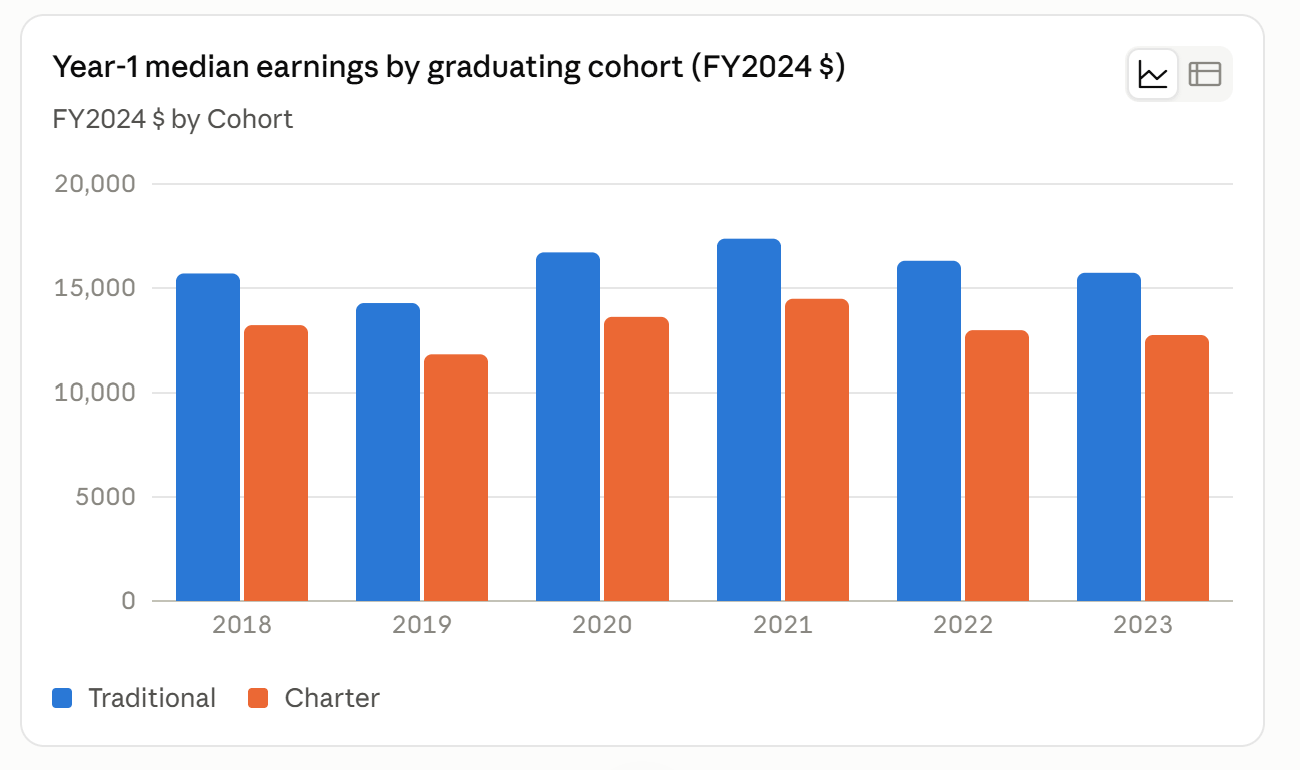
We saw recently that Charter School graduates make about 20% less over their lifetimes than graduates from traditional public schools. Now we find out the truly devastating results on our youngest citizens — lengthy stays in poverty.
Here’s how the Department of Health and Human Services describes the human impact of poverty:
“Residents of impoverished communities often have reduced access to resources that are needed to support a healthy quality of life, such as stable housing, healthy foods, and safe neighborhoods.Poverty can also limit access to educational and employment opportunities, which further contributes to income inequality and perpetuates cyclical effects of poverty.
Unmet social needs, environmental factors, and barriers to accessing health care contribute to worse health outcomes for people with lower incomes. For example, people with limited finances may have more difficulty obtaining health insurance or paying for expensive procedures and medications. In addition, neighborhood factors, such as limited access to healthy foods and higher instances of violence, can affect health by influencing health behaviors and stress.
Across the lifespan, residents of impoverished communities are at increased risk for mental illness, chronic disease, higher mortality, and lower life expectancy.”
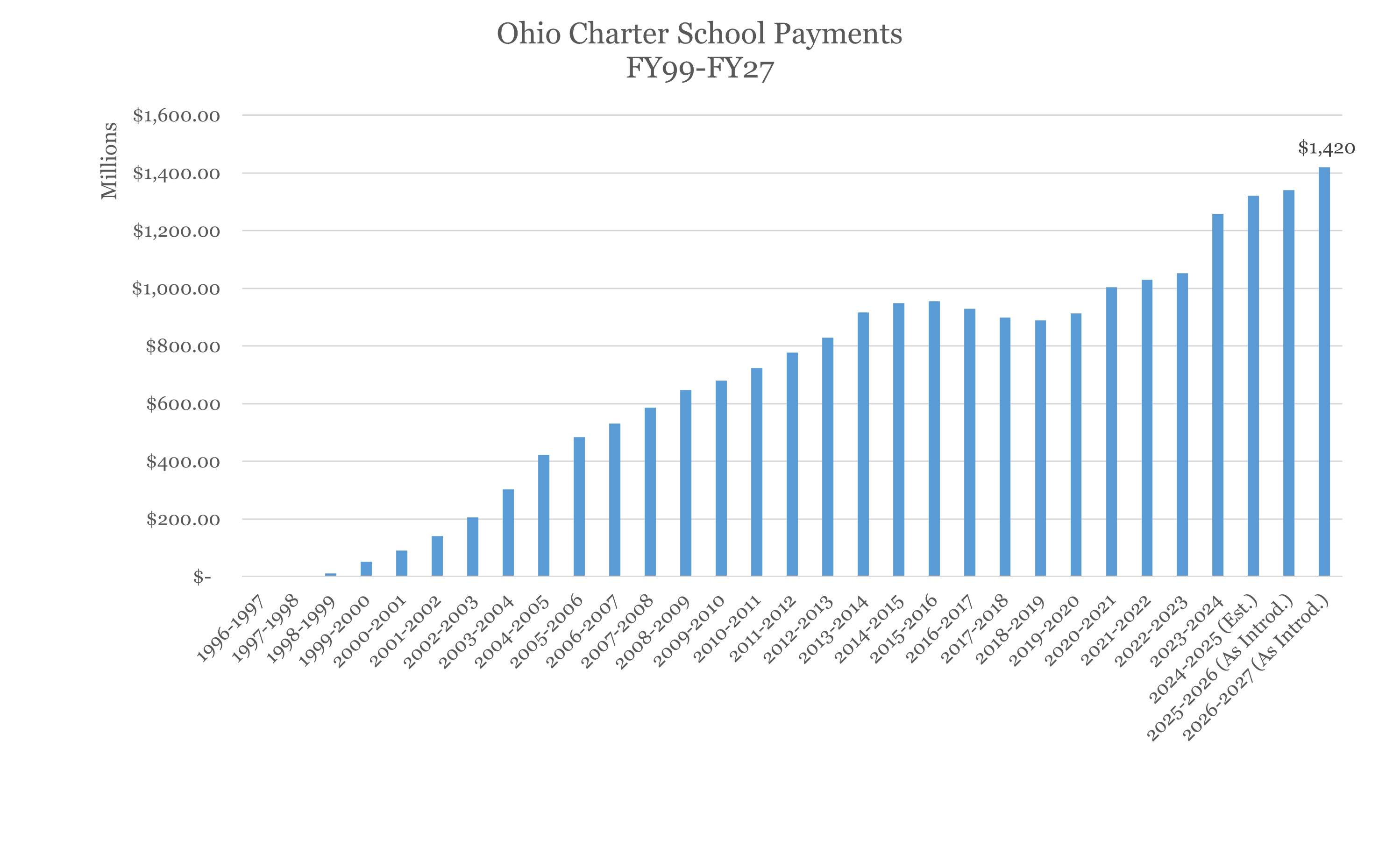
And Ohio Charter Schools, despite receiving $20 billion over the last 30 years and incredible accountability protections from powerful Ohio Republican politicians, are now contributing to greater poverty rates.
Charter schools overall keep kids in poverty for one year longer than kids in Ohio’s Big 8 districts. And 1 in 5 charters keep kids in poverty for as many as 6 years after graduation.
More than any test data, that is the most disturbing Ohio Charter School metric to me.
I’m at the point now that if someone wanted to shut down these things and start over, I wouldn’t object very strongly. Because while I think that Charter Schools could play a role in the state’s overall educational structure, the way Ohio’s schools currently operate actually harms Ohio’s students, and our local economy.
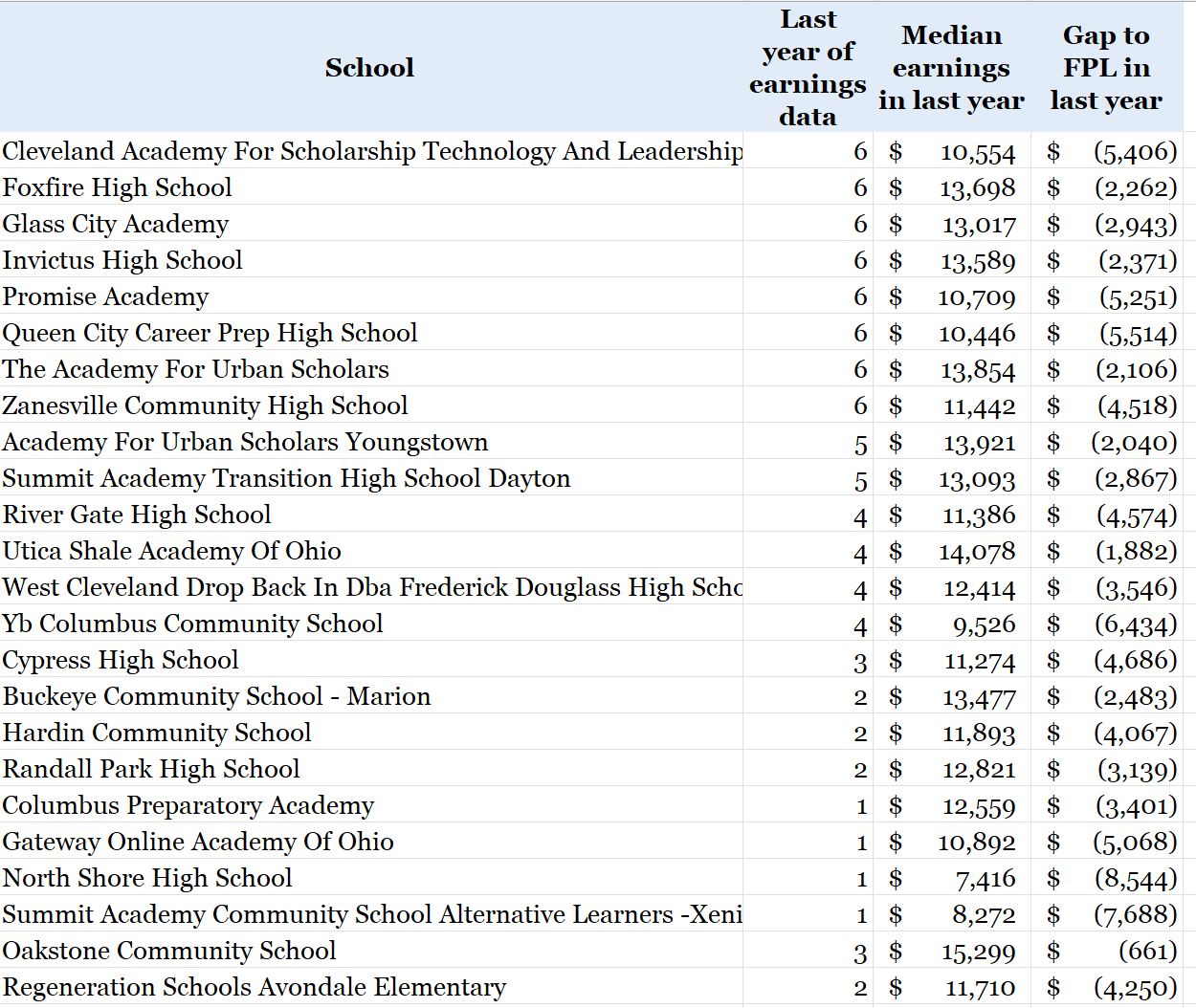
Here are the 22 Charter Schools whose graduates never climb out of poverty — sometimes by a lot. For example, after 6 years, graduates from the Cleveland Academy for Scholarship Technology and Leadership don’t even make 2/3 of the federal poverty line for a single person2!
Just one more nugget: Towpath Trail High School. Remember them? They just got one of 2 federal grants to expand their operation — theirs will go into Youngstown.
They actually produce graduates who earn less than the CHARTER SCHOOL median for each post-graduate year!
They take more than 1 year longer than the typical charter school to eclipse the federal poverty line and about 3 years longer than the typical school district.
Their larger graduation classes of 2019 and 2020 were still near or below the poverty line in years 3–4. The class of 2020 was at $14,228 in year 4 — more than $1,300 below the poverty line.
And they have the worst income-related data of any of the other 4 charters that got federal money and have high school graduates the state tracks.
So, hey, I have an idea! Let’s give them the federal taxpayer money to expand!?!?!?!?!
The charters whose students do better (though, importantly, not better overall than school districts)?
They’re getting capital money to fix their buildings. Not expand.
Can’t make this up.
This stuff’s gotta change. Like quick. But until the leaders in Columbus wake up to the wreck they’ve created in the name of political power, I fear more kids will be left behind, impoverished.
And pissed.
I know I am.
Again, charter schools takes kids and money from nearly every Ohio public school district. So that’s why I compare their outcomes with all Ohio public school districts.
I looked only at single FPL data because the average age of your first marriage now is between 28-30, which is outside the 6-year maximum range of the data.